

 360° Virtual Tours
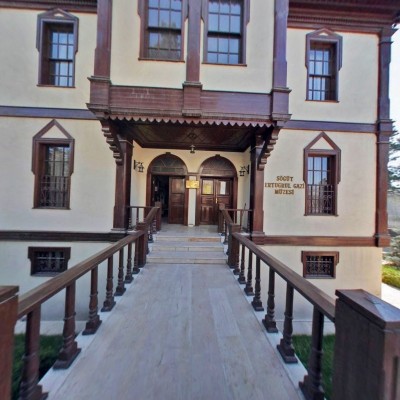


Although its exact construction date is unknown, it is known to have been built as a "dressing station" in the early 1900s by the mayor, Memiş Ağa. It is thought that this dressing station served a function similar to a modern-day dispensary. The building, notable for its wooden craftsmanship, features two arched doorways side-by-side on its front facade, and two rectangular windows with triangular pediments on each side wall. It has a wooden gable roof covered with traditional Turkish tiles. Restored in the style of old Turkish houses and opened to the public in 2001, the museum displays ethnographic artifacts and objects belonging to the Yörük people living in Söğüt and its surrounding areas. The museum also houses banners, old clothing and attire, hand-woven rugs and carpets, weapons, measuring and weighing instruments, towels and money pouches, and archaeological artifacts (coins from the Roman, Byzantine, and Ottoman periods, and earthenware vessels from the Roman period).
Historical
Venue Features
Activities
Similar places
Similar places, nearby places, and related routes are listed here as modular panels.
01
Chora Museum - External Sections
Istanbul · Marmara Region · Turkey
02
Konuralp Museum
Duzce · Black Sea Region · Turkey
03
Industry and Technology Museum
Ankara · Central Anatolia Region · Turkey
04
Ephesus Ruins
Izmir · Aegean Region · Turkey
05
Mardin Museum
Mardin · Southeastern Anatolia Region · Turkey
06
Chora Museum - Internal Sections
Istanbul · Marmara Region · Turkey
Nearby places
Similar places, nearby places, and related routes are listed here as modular panels.
Related routes
Travel plans that include this tour as a stop are listed here.
No matching content is available for this section.
Comments
1Sign in to leave a comment.
Sign inO zaman Pompalı silah mı vardı ?