

 360° Virtual Tours
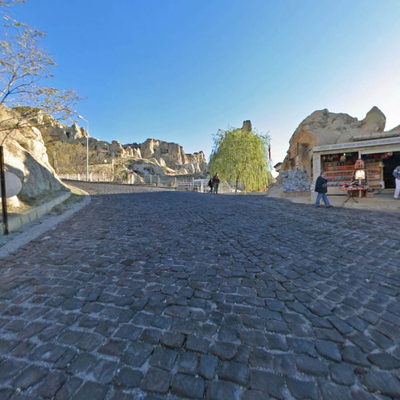


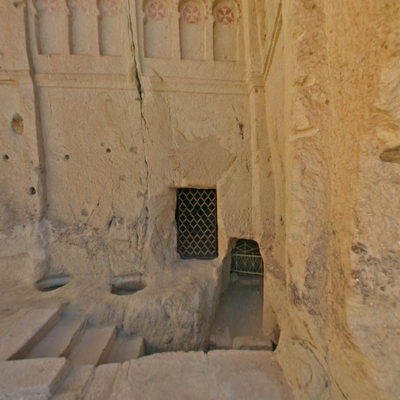


In the 3rd century, powerful priests transformed the region into a vibrant center of religious thought and life. By the 4th century, Cappadocia was known as the birthplace of three great saints (Basil the Great, Bishop of Caesarea; his brother Gregory of Nyssa; and Gregory of Nazianzus).
Basil did not choose an overly pious life; instead, he established small settlements far enough from villages and towns to serve as spiritual refuges for communities. Daily religious services were conducted under the supervision of a preacher. However, unlike in Egypt and Syria, these communities were not organized into separate, privileged groups distinct from other Christians. A significant reform Basil implemented in the churches of Cappadocia was the reintroduction of congregational prayer. The Göreme Open Air Museum today is where this system of education began, while Soğanlı, Ihlara, and Açıksaray represent later examples of this practice.
Must-see places:
Tokalı Church, Monastery of Nuns and Monks, St. Basil's Chapel, Elmalı Church, St. Barbara Chapel, Yılanlı (St. Onuphrius) Church, Cellar/Kitchen/Refectory, Dark Church, St. Catherine's Chapel, Çarıklı Church, Derinkuyu Underground City, Kaymaklı Underground City, Özkonak Underground City.
Historical
Venue Features
Activities
Similar places
Similar places, nearby places, and related routes are listed here as modular panels.
01
Sirnak Red Madrasah
Sirnak · Southeastern Anatolia Region · Turkey
02
Mugla Museum
Mugla · Aegean Region · Turkey
03
Ephesus Museum
Izmir · Aegean Region · Turkey
04
Ataturk Tumb
Ankara · Central Anatolia Region · Turkey
05
Canakkale National Parks Museum
Canakkale · Marmara Region · Turkey
06
Turk Telekom Museum of Communications
Ankara · Central Anatolia Region · Turkey
Nearby places
Similar places, nearby places, and related routes are listed here as modular panels.
01
Derinkuyu Underground City
Nevsehir · Central Anatolia Region · Turkey
02
Haci Bektas-i Veli Tomb
Nevsehir · Central Anatolia Region · Turkey
03
Dr. I.Sevki Atasagun Physical Therapy Hospital
Nevsehir · Central Anatolia Region · Turkey
04
Cappadocia Uchisar Castle
Nevsehir · Central Anatolia Region · Turkey
05
Cappadocia Uchisar Bazaar
Nevsehir · Central Anatolia Region · Turkey
06
Cappadocia Air Panorama
Nevsehir · Central Anatolia Region · Turkey
Related routes
Travel plans that include this tour as a stop are listed here.
No matching content is available for this section.
Comments
1Sign in to leave a comment.
Sign inİyi ama güzel kullanılmıyor klavyesi bozuk düzeltin lütfen :pray_tone1: